The MEDDIC vs MEDDPICC debate comes up every time a B2B sales team outgrows its current qualification process. Both frameworks help reps figure out which deals are worth pursuing, but they are not interchangeable. Sales teams using a structured qualification framework win at rates 10% higher than those relying on informal methods, and MEDDPICC adoption among high-performing B2B teams doubled between 2021 and 2022. If your team is deciding between the two, this guide breaks down exactly what separates them and which one fits your deals.
What Both Frameworks Are Trying to Do
Before getting into the MEDDIC vs MEDDPICC comparison, it helps to understand why either exists.
In B2B sales, it is easy to spend weeks on an opportunity that was never going to close. The budget was not real. The person you were talking to could not actually approve anything. A competitor had already locked it up. Both frameworks solve this by giving reps a structured set of questions to qualify a deal before investing serious time in it. The answers surface gaps. Gaps either get filled or they become reasons to move on.
Think of them like a preflight checklist. The checklist does not fly the plane. But skipping it is how deals crash on the runway.
What Is MEDDIC?
MEDDIC is the original framework, built in the 1990s at PTC, where it helped grow revenue from $300 million to $1 billion in four years. It covers six things every sales rep needs to know about a deal:
| Letter | Stands For | What It Means in Plain Language |
|---|---|---|
| M | Metrics | What numbers is the buyer trying to move? Revenue, cost savings, time saved? |
| E | Economic Buyer | Who actually signs the check? Not just your contact, the final decision-maker. |
| D | Decision Criteria | What does the buyer need a solution to do before they say yes? |
| D | Decision Process | How does this company make purchasing decisions? Who approves what? |
| I | Identify Pain | What problem are they solving, and what happens if they do not? |
| C | Champion | Is there someone inside the company who wants your solution to win? |
MEDDIC works well for focused deals: one or two decision-makers, a clear buying process, and a competitive landscape that is not particularly crowded.
What Is MEDDPICC?
MEDDPICC is MEDDIC with two extra elements. Everything in MEDDIC is still there. MEDDPICC just adds:
- P: Paper Process What happens after a buyer says yes. Contracts need legal review. Procurement runs vendor assessments. Security questionnaires get filed. In enterprise deals, this phase alone can add 30 to 90 days to a close date. MEDDPICC makes this a named qualification element because too many deals stall here after being technically won.
- C: Competition MEDDIC assumes you understand the competitive landscape. MEDDPICC makes it explicit. That means knowing not just which vendors you are up against, but whether the buyer might build internally, stick with their current setup, or do nothing. All of those are competitive threats.
MEDDIC vs MEDDPICC: The Core Difference

The MEDDIC vs MEDDPICC choice comes down to deal complexity. Here is how to think about it:
| If this describes your deals... | Use... |
|---|---|
| Deals close in under 6 months | MEDDIC |
| Average deal value under $50K | MEDDIC |
| Fewer than 5 stakeholders involved | MEDDIC |
| Procurement and legal rarely slow things down | MEDDIC |
| Your team is new to structured qualification | MEDDIC |
| Deals take 6 months or longer | MEDDPICC |
| Average deal value over $100K | MEDDPICC |
| 5 or more stakeholders in the buying process | MEDDPICC |
| Legal, security, or procurement add time to close | MEDDPICC |
| Multiple competitors regularly appear in your deals | MEDDPICC |
Starting with MEDDIC and growing into MEDDPICC is a valid path. Many teams begin with the simpler framework to build the qualification habit, then add the two extra elements as deal sizes grow. Adding process before your team has mastered the basics usually creates confusion rather than structure.
Why the MEDDIC vs MEDDPICC Question Is Really a Notes Problem
Here is something most MEDDIC vs MEDDPICC comparisons skip: neither framework works without reliable notes.
Every element relies on something the prospect actually said. The economic buyer they named. The pain they described. The approval steps they walked you through. If those details are not captured consistently after each call, the framework becomes a form your team fills from memory rather than facts.
This is the most common reason sales teams adopt MEDDIC or MEDDPICC and see no improvement. The CRM fields get added. But the discovery call notes are incomplete, so the qualification fields reflect what the rep remembers rather than what the buyer said.
Good sales call documentation is where most qualification gaps live. Reliable AI transcription closes the gap between what was said and what makes it into your pipeline. A structured sales follow-up process keeps qualification active between calls rather than letting it stall.
How Note Genie Helps Your Team Apply MEDDIC or MEDDPICC
Knowing the MEDDIC vs MEDDPICC difference is the easy part. Getting your team to apply either one consistently on every call is where most implementations break down. That is the problem Note Genie is built to solve.
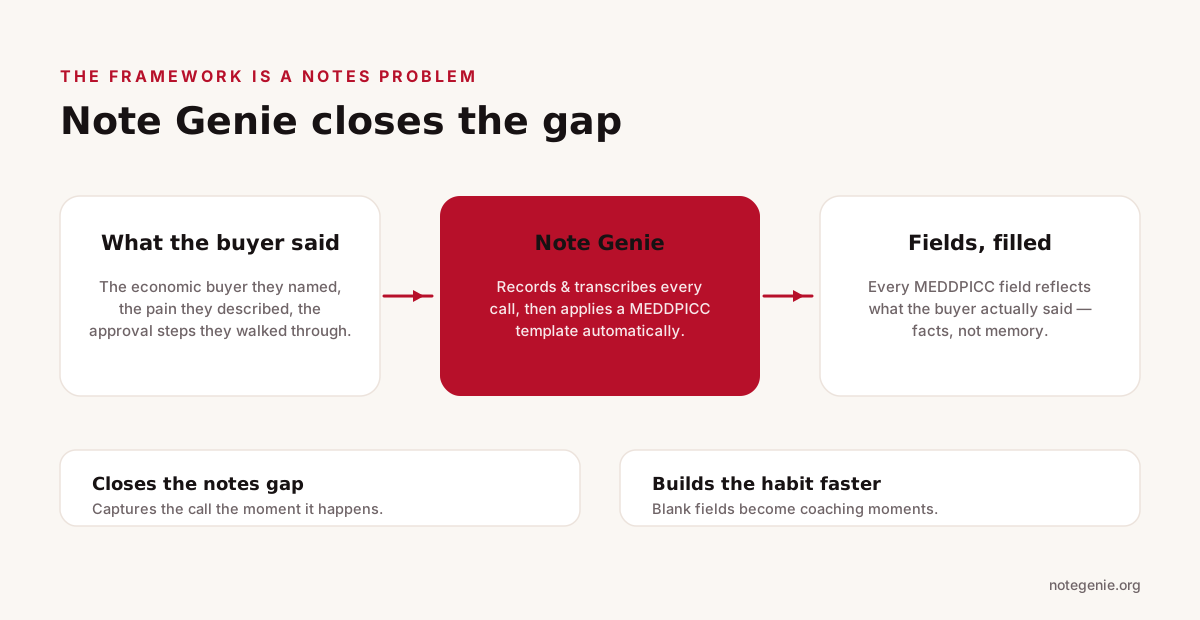
Note Genie is an AI note taker for sales teams. It records and transcribes every discovery call, then automatically applies a MEDDPICC template to each summary. No manual note-taking. No filling CRM fields from memory. The qualification data comes directly from what the prospect said.
Here is what Note Genie does for teams running MEDDIC or MEDDPICC:
| Note Genie Feature | What It Does for Qualification |
|---|---|
| AI call recording | Captures every discovery call locally, no bot join or premium account required |
| Speaker-labeled transcription | Attributes every statement to the right person so you know who said what |
| MEDDPICC summary template | Automatically maps call content to each framework element after every call |
| Folder Intelligence | Groups all calls with one prospect into a searchable knowledge base |
| Ask AI | Query past calls for specifics with timestamp answers |
| Action item extraction | Pulls next steps and follow-up tasks from each call automatically |
| Team sharing | Every rep works from the same note format for consistent pipeline reviews |
| Mobile recording | Captures in-person meetings on iPhone or Android |
Two reasons Note Genie makes MEDDIC and MEDDPICC actually stick:
- It closes the notes gap. The most common reason these frameworks fail is not the framework. It is that reps do not have reliable notes to fill the fields. Note Genie captures the call the moment it happens.
- It builds the habit faster. When every call produces a MEDDPICC-structured note, reps can see which fields keep coming back blank. Blank fields become coaching moments. Over time, reps start asking better discovery questions because they know what the output should look like.
The AI note taker for teams format means the whole sales org works from the same structure. Pipeline reviews stop being about reconstructing what happened and start being about what to do next.
Plans start free, with paid tiers from $4.99 per month. Explore the full feature set at notegenie.org/features or compare plans at notegenie.org/pricing.
Frequently Asked Questions
What is the main difference between MEDDIC vs MEDDPICC?
The MEDDIC vs MEDDPICC difference comes down to two added elements in MEDDPICC: Paper Process and Competition. MEDDIC covers the six core qualification criteria that apply to most complex B2B deals. MEDDPICC adds structure for the administrative steps before a contract is signed and the competitive alternatives the buyer is weighing.
Is MEDDPICC better than MEDDIC?
Not automatically. MEDDPICC is more comprehensive, but teams that are new to structured qualification often do better starting with MEDDIC. The simpler framework builds the habit first. MEDDPICC earns its extra complexity when deals regularly involve procurement, legal review, and active competitive evaluation.
Can a team switch from MEDDIC to MEDDPICC?
Yes, and the transition is relatively smooth because everything in MEDDIC carries over. The team just adds two fields: what the paper process looks like, and who the competition is. Most teams make the switch as deal sizes grow and enterprise accounts appear more often in the pipeline.
Do I need training to use MEDDIC or MEDDPICC?
Formal training helps but is not required. Many teams start by mapping the framework to their existing discovery questions and reviewing deals against the checklist in weekly pipeline meetings. Teams where managers reference MEDDIC or MEDDPICC in every deal review adopt it significantly faster than those that treat it as a one-time training event.
Final Thoughts on MEDDIC vs MEDDPICC
The MEDDIC vs MEDDPICC decision is simpler than it looks. If your deals are straightforward and your team is learning to qualify consistently, MEDDIC gives you a clean structure that covers the essentials. If procurement, legal review, and competition regularly decide your outcomes, MEDDPICC closes the gaps MEDDIC leaves open.
Whichever you choose, the discipline behind it matters more than the letters. Start with the framework that fits your deals today, capture the right details after every call, and build from there.
Try Note Genie free at notegenie.org and see what your qualification looks like when every discovery call produces a structured MEDDPICC summary automatically.