
We have all been there. A promising conversation wraps up, the prospect seems genuinely interested, and we tell ourselves we will circle back in a few days. Then the week fills up, another deal demands attention, and that follow-up never happens. Research shows that 80% of sales require at least five follow-up contacts to close, yet 44% of salespeople give up after just one attempt. The gap between those two numbers is where revenue quietly disappears. Building a system that makes follow-ups impossible to forget is not a discipline problem. It is a process problem, and we can solve it.
Why Follow-Ups Slip Through the Cracks
Most follow-up failures are not about laziness or bad intentions. They happen because sales workflows depend too heavily on memory. We close a call, move on to the next task, and trust that we will remember to come back. We rarely do, at least not consistently.
A few patterns tend to drive this:
- No capture system after calls. When notes live only in our head, the details fade fast. Names, concerns, agreed-upon timelines, and specific objections all blur together across a full pipeline.
- No clear next step documented. Ending a call without a defined follow-up action is essentially choosing to forget it.
- Context switching kills continuity. Jumping between calls, emails, and proposals throughout the day leaves little mental bandwidth for tracking where each prospect stands.
- Relying on CRM reminders alone. Tools like a CRM are useful, but they only work if we actually update them in the moment. Most of us do not.
The fix is not working harder. It is building a structure that does the remembering for us.
Build a Follow-Up Workflow That Runs Itself
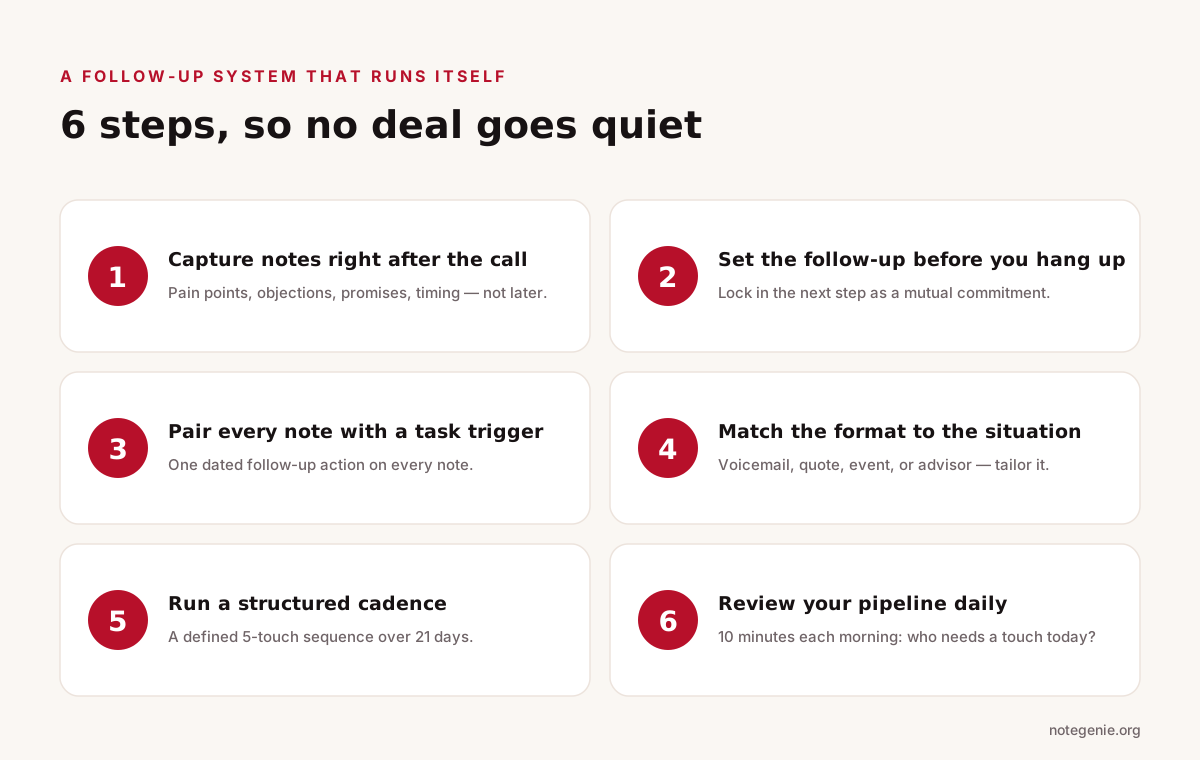
1. Capture Notes Immediately After Every Call
The most reliable follow-up systems start with consistent note-taking right after each conversation. Not an hour later. Not at end of day. Right after.
What to capture every time:
- The prospect's stated pain points
- Any objections raised
- What was promised or implied by either side
- The agreed-upon timing for the next touch
- Any personal details that help personalize future outreach (recent event, company news, something they mentioned in passing)
If you are fielding back-to-back calls, this discipline gets harder. That is where AI-powered note-taking becomes a practical advantage rather than a nice-to-have. Tools built for capturing spoken conversations, like what we cover in our AI notes maker for podcasts and recorded calls, can surface key details from recordings so nothing gets buried.
2. Set the Follow-Up Before You Hang Up
One of the most effective habits high-performing sales reps develop is locking in the next step before the current conversation ends. This is not just about scheduling a call. It is about creating a mutual commitment.
At the close of every call, say something like: "I will send over the proposal by Thursday, and I will follow up with you on Monday to walk through any questions." That phrasing does two things. It gives you a clear task, and it gives the prospect an expectation they are already agreeing to.
When you then document that in your notes with a date attached, you have turned a vague intention into a specific commitment.
3. Pair Your Notes with a Task Trigger
Notes without action items are just records. Every post-call note should include at least one follow-up task with a date.
Here is a simple structure that works across most sales workflows:
| Note Element | What to Include |
|---|---|
| Prospect status | Interested, hesitant, needs more info, price-sensitive |
| Last touchpoint | Date, channel, what was discussed |
| Outstanding items | Proposal, case study, intro to a decision-maker |
| Next follow-up | Date and method (email, call, voicemail + email) |
| Personal hook | Something they mentioned to reference next time |
This does not need to live inside a complex system. It needs to be somewhere you actually look every day.
4. Match the Follow-Up Format to the Situation
Not every follow-up should be the same. A follow up email after a voicemail is different from a post-sale communication checking in on onboarding. An event follow up email from a conference has a different job than a follow up quotation email after sending pricing.
Matching format to context improves response rates and keeps your outreach from feeling generic. A few reliable frameworks:
- After leaving a voicemail: Send an email within the same hour referencing what you said. Keep it to three lines and give them two ways to respond.
- After sending a quote: Follow up on a quote within 48 to 72 hours. Do not just ask if they received it. Address a likely concern proactively, like timeline or implementation.
- After an event or webinar: Reference something specific from the event. Webinar follow up email examples that work always tie back to a moment the prospect actually experienced, not a generic "great to connect."
- For financial advisor and mortgage sales follow-up strategies: These are longer-cycle, relationship-heavy deals. A financial advisor follow up email should feel like a continuation of a real conversation. Reference the specific concern they raised. Show you listened.
5. Use a Structured Cadence, Not Random Outreach
One of the clearest improvements any sales team can make is moving from reactive follow-up (whenever we remember) to a structured cadence (a defined sequence of touches at set intervals).
A basic five-touch cadence looks like this:
- Day 1: Call plus email
- Day 3: Email with a value-add (relevant article, case study, data point)
- Day 7: Call plus a follow up voicemail with email
- Day 14: Personalized email referencing a specific concern from the first call
- Day 21: Final outreach with a clear close or release
Having this structure in place means you are not deciding what to do with each lead. You are executing a system. For teams managing multiple accounts and touch sequences, our breakdown of meeting management tools covers how to keep that structure consistent across a full pipeline.
6. Review Your Pipeline Daily for Open Follow-Ups
Set aside ten minutes each morning to scan every open lead and ask one question: does anyone need a follow-up today? If your notes are structured consistently, this takes almost no time. You are checking a list, not reconstructing context from memory. This habit also catches follow-ups that slipped when a prospect asked for a delay or a call ended without a clear next step.
How Note Genie Fits Into a Follow-Up System
The part of the follow-up workflow that breaks down most often is not the follow-up itself. It is everything that has to happen before it: remembering what the prospect said, finding the detail that makes an email feel personal, and knowing exactly where the conversation left off. That is where Note Genie does its work.
Note Genie is an AI meeting recorder built for Zoom, Google Meet, Microsoft Teams, and in-person conversations. It captures audio locally through the desktop app, which means it works even on a free Zoom account and even when you are not the host. No bot joins the call. No awkward participant notification. Just a clean recording and a structured summary ready before you are back at your desk.
For sales teams, that matters because the note is what makes the follow-up possible. When the recording is processed, Note Genie produces a speaker-labeled transcript, a TL;DR, key decisions, and a list of action items. For discovery and sales calls specifically, it applies a MEDDPICC template that pulls out metrics, economic buyer, identified pain, and next steps in a format that maps directly onto your pipeline.
Here is a quick look at what Note Genie includes out of the box:
| Feature | What It Does for Follow-Ups |
|---|---|
| AI meeting recorder | Captures every call locally, no premium account required |
| Speaker-labeled transcription | Attributes every statement to the right person, no guesswork |
| Structured summaries | TL;DR, decisions, and action items ready in about 30 seconds |
| MEDDPICC sales template | Organizes discovery calls into pipeline-ready fields automatically |
| Folder Intelligence | Groups all meetings with one client into a searchable knowledge base |
| Ask AI | Answers questions like "what budget did we agree on?" with the exact timestamp |
| Upload anything | Audio, video, PDFs, and docs all live in the same library |
| Mobile app | Records in-person meetings and site visits on iPhone or Android |
The Folder Intelligence feature is especially useful for longer-cycle deals. Every call with a prospect lands in one folder, and Note Genie builds a running knowledge base from all of them. Instead of re-reading three weeks of notes before a follow-up call, you ask a question and get the answer with a citation back to the exact recording and minute it came from.
Pricing starts at free (30 minutes per month, no credit card), with paid plans from $4.99 per month for 100 minutes and $7.99 per month for 300 minutes. The Pro plan at $7.99 covers most individual sales reps, and a Power User tier at $19.99 per month includes 1,000 minutes and unlimited AI questions.
Explore the full feature set at notegenie.org/features or compare plans at notegenie.org/pricing.
Frequently Asked Questions
How many follow-ups should I send before giving up on a prospect?
Five is the minimum for most deals, with peak engagement often between the fifth and eighth touch. Most salespeople stop well before that point, which means persistence alone is a competitive advantage. Define a cadence of at least five structured touches before moving a lead to inactive.
What is the best way to follow up on a quote?
Send the first follow-up within 48 hours and make it specific. Rather than asking if they received the quote, address one likely concern directly. Price, timeline, and implementation are the most common. Tying the email back to something the prospect said during the original conversation increases the odds they respond.
Should I send an email after leaving a voicemail?
Yes, always. A follow up voicemail with email covers both channels and makes it easier for the prospect to respond however works best for them. Keep the email short, reference what you said in the voicemail, and include one clear call to action.
How do I build a follow-up system when I am managing a large pipeline?
Start with consistent note structure. Every call should produce a note with the same core elements: status, last touch, outstanding items, and a next follow-up date. Pair that with a daily review habit and a defined cadence. The volume becomes manageable when the system does the tracking instead of your memory.
Final Thoughts on How to Never Forget Sales Follow-Ups Again
Forgetting follow-ups is not a personal failure. It is what happens when the process relies on memory instead of structure. When we capture the right details immediately after each call, define a next step before hanging up, and run a set cadence rather than reacting when we happen to remember, follow-up stops feeling like a chore. The deals that go quiet often just needed one more touch at the right time.
The good news is that the system does not have to be complicated. Consistent meeting notes, a defined cadence, and a tool that handles the capture for you is all it takes to close the gap between where most reps stop and where most deals actually close. If you are still piecing notes together manually after every call, you are spending time on the part of the process that AI can handle for you.
Start recording your sales calls free at notegenie.org and see what a structured follow-up system feels like when the notes write themselves.