Enterprise sales teams do not lose deals because they pitch badly. They lose because they qualify poorly. The wrong stakeholder gets championed. The paper process blindsides a close date. A competitor surfaces late. These are not surprises. They are gaps in a qualification framework. Organizations that fully adopt the MEDDPICC sales methodology report 18% higher win rates and 24% larger deal sizes, and structured qualification processes have been linked to 41% higher win rates and 26% shorter sales cycles. If your team is running complex B2B deals without a structured process behind them, MEDDPICC is worth understanding inside out.
What Is MEDDPICC?
MEDDPICC is a sales qualification framework built for complex B2B enterprise deals. It breaks every opportunity into eight criteria that determine whether a deal deserves your team's time and how to move it forward systematically.
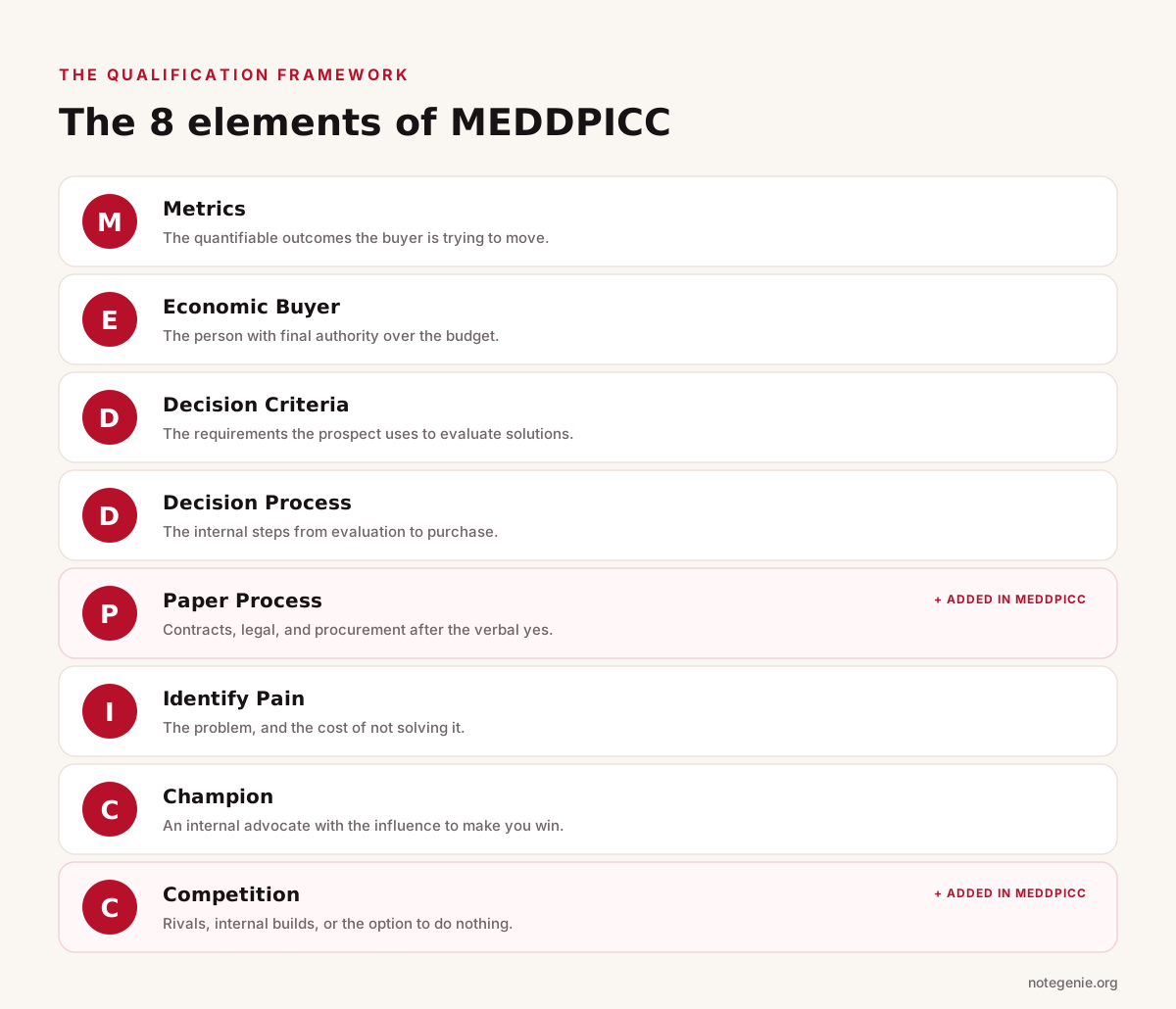
The acronym stands for:
- M: Metrics
- E: Economic Buyer
- D: Decision Criteria
- D: Decision Process
- P: Paper Process
- I: Identify Pain
- C: Champion
- C: Competition
The framework originated at PTC (Parametric Technology Corporation) in the 1990s, where Dick Dunkel and his colleagues built the original MEDDIC framework to address a straightforward problem: too many unqualified deals clogging the pipeline. PTC grew from $300 million to $1 billion in revenue over four years using it. The methodology has since evolved into MEDDPICC to account for the realities of modern enterprise selling, where procurement cycles are longer, buying committees are larger, and competitive dynamics are more complex.
The 8 Elements of MEDDPICC Sales Methodology
Metrics
Metrics are the quantifiable outcomes the prospect expects from your solution. Numbers speak louder than any pitch. Before anything else, reps need to know what the buyer is trying to move: revenue, cost savings, time to close, error rates, headcount. These figures frame the business case and give the economic buyer something concrete to approve.
Discovery questions to ask: "What specific outcomes are you trying to achieve?" and "How does your organization measure success in this area?"
Economic Buyer
The economic buyer is the person with final authority over the budget. Not the user. Not the project champion. The person who signs off. In enterprise deals, this person is often several levels above your day-to-day contact, and many deals stall because reps never actually reach them. Identifying the economic buyer early and getting direct access is one of the highest-leverage moves in the MEDDPICC sales process.
Decision Criteria
Decision criteria are the requirements the prospect uses to evaluate solutions. These can be technical, financial, operational, or cultural. Understanding them lets reps tailor positioning to what the buyer actually cares about, rather than leading with features that do not map to their evaluation scorecard.
Decision Process
The decision process is the internal sequence of steps the prospect follows to go from evaluation to purchase. Who reviews the shortlist? Who runs the final approval meeting? What internal sign-offs are required? Understanding the process lets reps forecast realistic close dates and avoid being caught off guard by approvals they did not know existed.
Paper Process
This is one of the two elements that separate MEDDPICC from the original MEDDIC framework. The paper process covers everything after a verbal yes: contracts, security reviews, legal sign-off, procurement clearance, and any compliance requirements. In large enterprise deals, this phase can add weeks or months to a close date. Surfacing it early prevents the most common form of pipeline slippage: deals that are technically won but contractually stuck.
Identify Pain
Pain is the specific problem the prospect is trying to solve and the cost of not solving it. Without clearly identified pain, there is no urgency. Without urgency, deals stall. This element pushes reps to go deeper than surface-level needs and find the business consequence that makes inaction expensive.
Champion
A champion is an internal advocate who wants your solution to win and has the influence to make it happen. Champions are not just friendly contacts. They access information you cannot, speak on your behalf in rooms you are not in, and build internal consensus before the final decision. Qualifying whether someone is a real champion, versus a supporter, is one of the more nuanced skills in enterprise sales.
Competition
The second addition from MEDDIC to MEDDPICC. Competition covers the full competitive landscape: direct competitors, alternative vendors, internal builds, and the option to do nothing. Understanding your competitive position shapes messaging, pricing strategy, and how the champion positions your solution internally.
MEDDIC vs MEDDPICC: What Is the Difference?
The three most common versions of this framework are MEDDIC, MEDDICC, and MEDDPICC. Here is how they compare:
| Framework | Elements | Best For |
|---|---|---|
| MEDDIC | Metrics, Economic Buyer, Decision Criteria, Decision Process, Identify Pain, Champion | Mid-market deals, shorter cycles, fewer stakeholders |
| MEDDICC | All of MEDDIC + Competition | Markets with multiple established vendors |
| MEDDPICC | All of MEDDICC + Paper Process | Enterprise deals with complex procurement and legal requirements |
If your average deal closes in 30 to 60 days with three to five stakeholders, MEDDIC may give you enough structure without adding unnecessary complexity. If your deals run six months or longer with large buying committees and procurement involvement, MEDDPICC is the appropriate framework.
How to Apply MEDDPICC in Discovery Calls
MEDDPICC only works if it is captured consistently. The framework is not a checklist you complete once. It is a living record of what you know about the deal and what you still need to find out. That means every discovery call needs to produce structured notes that map back to each element.
A few practices that make this work in real selling environments:
- Use it as a gap analysis, not a form. After each call, ask which MEDDPICC fields you can fill in with confidence and which ones are still blank. Blank fields are deal risks. Knowing what you do not know is as useful as knowing what you do.
- Get the economic buyer on the phone early. Most reps wait too long to pursue this. The earlier you can get the economic buyer involved, even briefly, the more accurate your qualification becomes and the less likely you are to invest deeply in a deal that cannot close.
- Map the paper process before you send a proposal. Asking "what does your internal approval process look like once you decide to move forward?" before you reach the final stages prevents surprises that derail close dates.
For teams running back-to-back discovery calls, capturing all eight elements manually is a real challenge. This is where structured meeting notes become critical. Without a reliable capture system after each call, MEDDPICC gaps go unnoticed until they become lost deals.
How Note Genie Supports MEDDPICC Qualification
The gap between knowing the MEDDPICC sales methodology and applying it consistently is almost always a documentation problem. Reps know what to ask. The notes from the call do not reflect what they heard. Details get lost between the conversation and the CRM update.
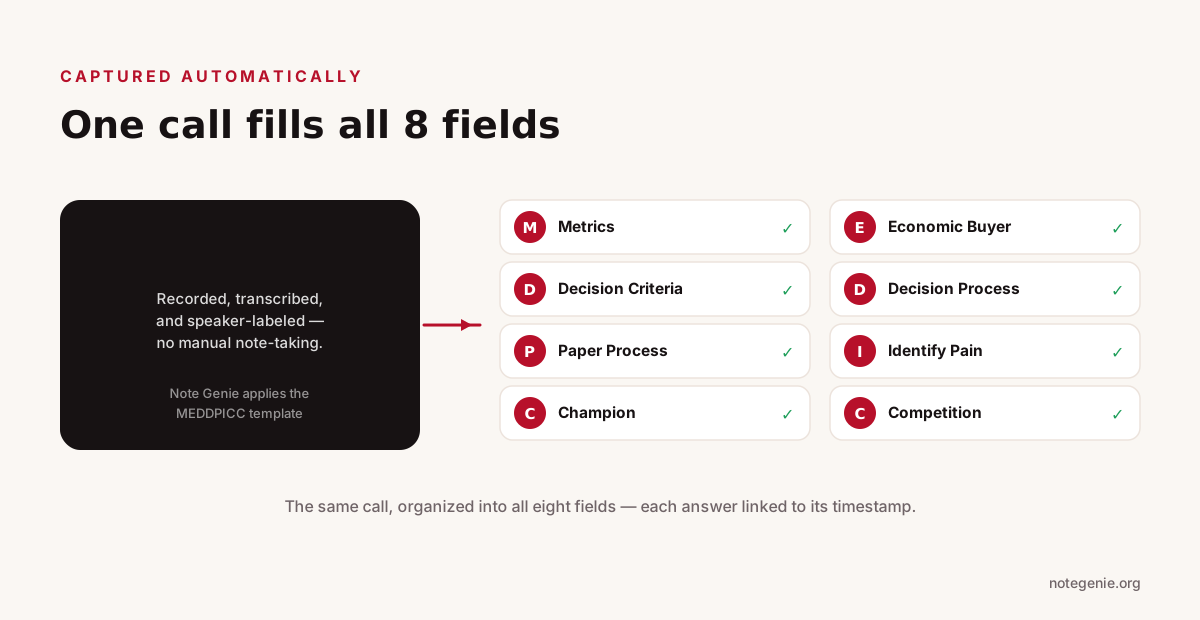
Note Genie solves this at the source. It records and transcribes discovery calls, then applies a MEDDPICC template automatically to each sales call summary. Instead of a rep manually reconstructing a conversation into pipeline fields, Note Genie surfaces the economic buyer mentioned, the pain the prospect named, the decision timeline they described, and the competitors they referenced. It is the same information from the same call, organized into the structure the framework requires.
Here is what that looks like in practice:
| MEDDPICC Element | What Note Genie Captures |
|---|---|
| Metrics | KPIs and numbers the prospect mentioned during the call |
| Economic Buyer | Who the prospect said makes the final decision |
| Decision Criteria | Requirements and priorities stated during discovery |
| Decision Process | Internal steps and approval chain described by the prospect |
| Paper Process | Procurement, legal, or compliance timelines raised in the call |
| Identify Pain | The specific problem and its business cost as the prospect framed it |
| Champion | Who inside the organization is pushing for a solution |
| Competition | Any alternatives or competitors the prospect mentioned |
Beyond single calls, Note Genie's Folder Intelligence groups every meeting with one prospect into a searchable knowledge base. For deals that run across multiple calls over several months, this means you can ask "what budget figure did they mention in the first call?" and get the exact answer with a timestamp, rather than re-reading weeks of scattered notes.
For teams working with recorded calls, the AI notes maker capability also processes uploaded audio and video, meaning even calls recorded outside Note Genie can be run through the same MEDDPICC template.
Explore Note Genie's full feature set at notegenie.org/features, or compare plans at notegenie.org/pricing.
Frequently Asked Questions
What does MEDDPICC stand for in sales?
MEDDPICC stands for Metrics, Economic Buyer, Decision Criteria, Decision Process, Paper Process, Identify Pain, Champion, and Competition. It is an eight-element sales qualification framework used primarily in enterprise B2B sales to qualify deals, forecast accurately, and identify gaps that could prevent a deal from closing.
What is the difference between MEDDIC and MEDDPICC?
MEDDIC is the original six-element framework developed at PTC in the 1990s. MEDDPICC adds two elements: Paper Process, which accounts for contracts, legal review, and procurement requirements, and Competition, which covers the competitive landscape. MEDDPICC is designed for more complex enterprise deals where these factors regularly influence close dates and win rates.
Is MEDDPICC only for enterprise sales?
MEDDPICC was built for enterprise deals with long cycles, large buying committees, and complex procurement requirements. It can be applied to mid-market sales, but the full framework may be more structure than those deals require. Teams selling below $50K ACV with cycles under 60 days may find MEDDIC a more practical starting point.
How do you track MEDDPICC across a sales team?
Most teams track MEDDPICC through CRM fields mapped to each element, reviewed in weekly pipeline meetings. The consistency of that tracking is the main variable. Teams where managers reference MEDDPICC in every deal review adopt it significantly faster than teams that treat it as a one-time training event.
Final Thoughts on MEDDPICC Sales Methodology
MEDDPICC does not close deals on its own. What it does is make sure your team is spending time on the right deals, asking the right questions, and catching the gaps that kill pipelines before they surface too late. The framework is only as useful as the discipline behind it, and that discipline starts with capturing what was actually said in every discovery call.
If your team is running enterprise deals without a consistent qualification structure, the MEDDPICC sales methodology is the most proven place to start. And if your notes from those calls are still scattered or manual, you are leaving qualification gaps open that the framework was built to close.
Start capturing MEDDPICC-structured notes automatically at notegenie.org and see what your discovery calls look like when every element is accounted for.